
Sewing Machines for Beginners: How to Choose One Without Feeling Overwhelmed
Buying your first sewing machine doesn't have to feel like deciphering an appliance manual written in another language.
Before we dive in... Some of the links in this guide are affiliate links. If you choose to purchase through them, I may earn a small commission (at no extra cost to you). I only recommend products I'd feel comfortable suggesting to a friend, and your support helps keep Sew What by Winter stocked with free beginner-friendly tutorials, troubleshooting guides, and sewing resources. Thank you!
Buying Your First Sewing Machine Doesn't Have to Be Complicated
Walking into a craft store to buy your first sewing machine can feel a little like shopping for your first car. There are dozens of models. Hundreds of features.
Words like automatic needle threader, drop-in bobbin, and free arm get tossed around as if everyone knows what they mean.
Suddenly you're wondering if you need a machine that quilts, embroiders, monograms, makes coffee, and files your taxes.
You don't. The truth is, most beginners don't need more features. They need fewer decisions.
Let's make it make sense.
Quick Picks
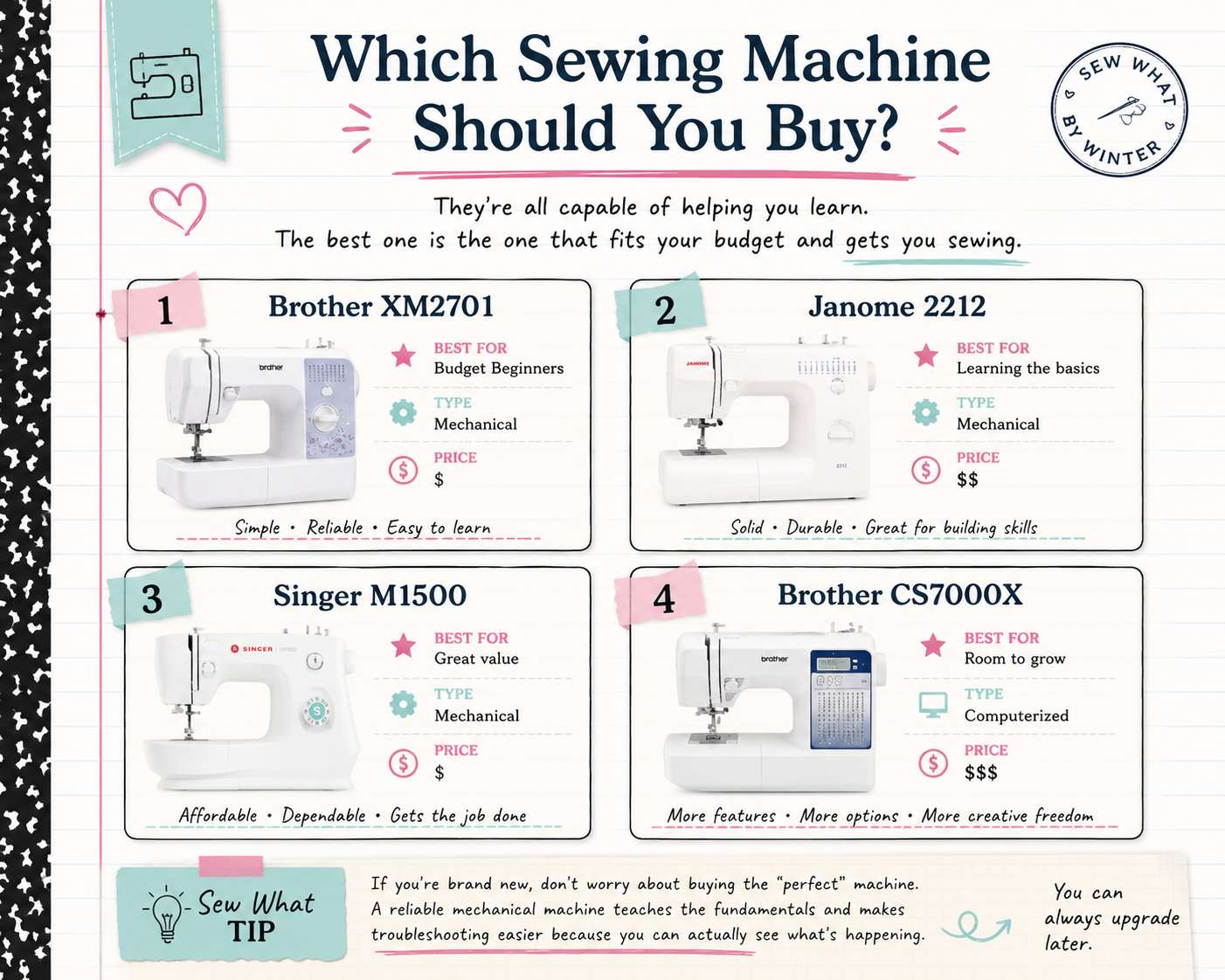
Not sure what these terms mean? Don't worry—we'll walk through exactly what to look for (and what you can safely ignore) before you decide.
Before We Talk About Machines…
Here's the biggest misconception I see. People assume that buying a more expensive sewing machine automatically makes sewing easier. It doesn't.
A sewing machine is a tool. Understanding how it works is what builds confidence.
The fanciest machine in the world can't compensate for incorrect threading, the wrong needle, or tension problems. (Trust me, machines don't operate on vibes.)
Your goal isn't to buy the "best" machine. Your goal is to buy one that lets you learn.
What Every Beginner Sewing Machine Should Have
Good news. The list is surprisingly short. A beginner-friendly sewing machine only needs a few essential features.
✔ Straight Stitch
This is the stitch you'll use most often.
Garments, tote bags, pillowcases, quilts—you'll spend most of your sewing life using a simple straight stitch.
✔ Zigzag Stitch
The zigzag stitch keeps fabric edges from fraying and works well with stretchy fabrics.
One stitch. Lots of jobs.
✔ Adjustable Stitch Length
Different fabrics behave differently.
Being able to make stitches longer or shorter gives you much more control over your projects.
✔ Reverse Stitch
Reverse stitching locks your stitches in place so your seams don't unravel.
It's small, but you'll use it constantly.
✔ Adjustable Upper Tension
Most modern machines include this.
You won't adjust it often, but it's important that the option is there when troubleshooting becomes necessary.
Features You Probably Don't Need (Yet)
Manufacturers love adding features because more buttons make machines look impressive. As a beginner, most of them won't help you learn any faster.
You can safely skip things like:
300 decorative stitches
Built-in embroidery
Alphabet fonts
Touch screens
Automatic thread cutters
Wi-Fi connectivity
Bluetooth
Your sewing machine doesn't need to connect to your phone. It needs to connect thread to fabric.
Mechanical vs. Computerized Machines
This question comes up all the time.
Mechanical Machines
Pros
Simple to operate
Often more affordable
Easy to learn
Fewer electronic components
Cons
More manual adjustments
Fewer convenience features
Perfect for beginners who enjoy learning how the machine works.
Computerized Machines
Pros
Push-button stitch selection
Speed control
Often quieter
Helpful convenience features
Cons
Higher price
More electronics
Can feel overwhelming at first
If a computerized machine fits your budget, that's perfectly fine—but don't feel like it's a requirement. Learning the fundamentals matters much more than the display screen.
My Beginner Sewing Machine Recommendations
These are machines I'd feel comfortable recommending to someone just getting started.
Budget Friendly
Brother XM2701
A dependable entry-level machine with enough features to learn confidently without becoming overwhelming.
Winter's Pick →(Affiliate Link)
Best Mechanical Machine
Janome 2212
Simple. Reliable. Easy to understand.
If you enjoy learning how things work, this is an excellent choice.
Winter's Pick →(Affiliate Link)
Best Computerized Beginner Machine
Brother CS7000X
If your budget allows, this machine offers room to grow while still being beginner-friendly.
Winter's Pick →(Affiliate Link)
Best Value
Singer M1500
A great option for learning basic sewing skills without spending a fortune.
Winter's Pick →(Affiliate Link)
What Machine Do I Use?
People ask me this all the time, so here's the answer.
I sew on a Singer Model 160 Limited Edition to commemorate Singer’s 160th Anniversary, and I've had it for more than 15 years.
It's sewn everything from 4-H competition garments to everyday projects, and it's been with me through different seasons of life—including a few years when it patiently waited while family life took center stage.
Could I sew on a different brand? Absolutely.
The reason I still enjoy this machine isn't because I think Singer is the only good option. It's because I know how it works.
That's something I want every beginner to experience. Confidence doesn't come from owning the "perfect" sewing machine. It comes from understanding the one sitting in front of you.
Machines respond to inputs—not price tags.
So whether your machine is brand new, inherited from a family member, or picked up secondhand, learning how it works will take you much farther than chasing the newest model.
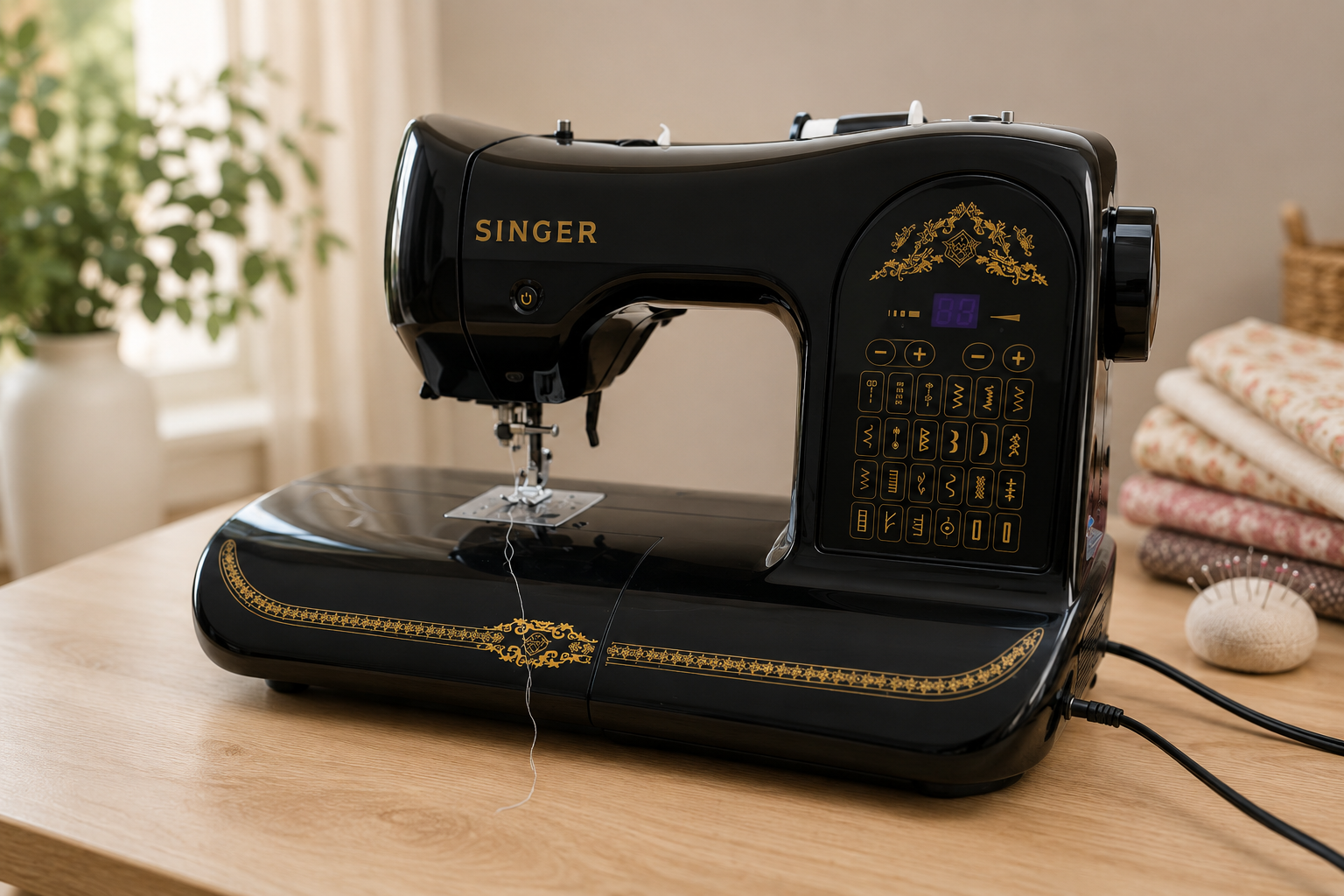
Photo of my Singer Model 160 Limited Edition—my sewing companion for more than 15 years.
What Matters More Than Brand
People often ask, "Is Brother better than Singer?"
Or
"Should I buy a Janome instead?" My answer is usually…Maybe.
Every brand makes excellent machines. Every brand also makes machines that aren't the best fit for beginners.
Instead of focusing on the logo, ask yourself these questions:
Can I easily thread this machine?
Can I buy needles and bobbins locally?
Is there a good instruction manual?
Can I find tutorials online?
Does it sew a reliable straight stitch?
Those answers matter far more than the name on the front.
Before You Buy
Run through this quick checklist.
✔ It fits your budget.
✔ It has straight and zigzag stitches.
✔ Replacement needles and bobbins are easy to find.
✔ The instruction manual is available online.
✔ It feels comfortable to sit in front of.
✔ You aren't paying for dozens of features you'll never use.
If you can check those boxes, you're probably looking at a great beginner machine.
One More Thing…
Buying a sewing machine is exciting. But remember…The machine doesn't do the learning. You do.
Confidence doesn't come from owning the most expensive model on the shelf.
It comes from understanding what your machine is telling you and knowing how to respond. That's exactly what we'll be learning together.
Ready to Start Sewing?
If you're ready to go from "Where do I even begin?" to confidently making your first stitches, I'd love to help.
Download the free Sew What Debug Guide for a calm, step-by-step guide to setting up your sewing space, understanding your machine, choosing beginner-friendly supplies, and building confidence one stitch at a time.
