
The Beginner Sewing Debug Guide: Troubleshoot Without Panic
Something goes wrong while you’re sewing and suddenly it feels deeply personal.
The thread bunches underneath the fabric. Your stitches start skipping. The machine makes a noise that feels vaguely threatening. You adjust three settings at once, make everything worse, and begin wondering if your sewing machine has developed a personal vendetta against you.
It hasn’t. Machines don’t operate on vibes.
Most beginner sewing frustration comes from one core misunderstanding: people think sewing problems are random when they are usually systems responding to changed variables.
And once you understand that, sewing becomes significantly less stressful.
The Beginner Sewing Debug Guide was created to help beginners troubleshoot sewing problems calmly, logically, and without spiraling every time tension acts suspicious.
Because sewing isn’t magic. It’s mechanics in soft form.
Sewing becomes much less intimidating when you stop asking “What did I do wrong?” and start asking “What changed?”
Key Takeaways
Most sewing problems are explainable system responses.
Sewing machines respond to inputs, not emotion.
Calm debugging works better than random guessing.
Confidence grows when you understand variables and sequencing.
The Beginner Sewing Debug Guide helps beginners troubleshoot logically instead of panicking.
In This Guide
Why Sewing Problems Feel So Personal
Sewing Machines Respond to Inputs
The Sew What Systems Method™
Why Most Troubleshooting Advice Overwhelms Beginners
What’s Inside the Beginner Sewing Debug Guide
Calm Debugging Builds Real Confidence
Frequently Asked Questions
The Beginner Sewing Debug Guide is a beginner-friendly troubleshooting resource that helps sewists solve common sewing problems using flowcharts, decision trees, and simple “What changed?” logic prompts instead of guessing or panicking.
Why Sewing Problems Feel So Personal
Most sewing mistakes are not personal failures. They’re system feedback.
When beginners encounter sewing problems, they often assume the issue is themselves.
Not skilled enough.
Not creative enough.
Not coordinated enough.
But sewing machines are mechanical systems. They respond to thread tension, needle condition, fabric type, threading sequence, and dozens of tiny variables that shift throughout a project.
The problem is that many tutorials teach sewing techniques without teaching sewing mechanics.
So when something goes wrong, beginners don’t have a framework for understanding why it happened. Which means confusion quickly turns into frustration. And honestly, panic-adjusting six settings at once rarely improves the situation.
Most of the time, sewing problems are not evidence that you “can’t sew.” Variables changed. That’s all.
Once beginners learn to approach sewing through observation instead of self-criticism, troubleshooting becomes far calmer and much more effective.
Because understanding reduces anxiety.
Sewing problems feel emotional when you don’t yet understand the system behind them.
Sewing Machines Respond to Inputs
Machines respond to inputs, not emotions.
One of the most helpful things a beginner can learn is this: Sewing machines are surprisingly logical.
If stitches suddenly start looping underneath your fabric, the machine is reacting to something. If tension looks uneven, something shifted. If fabric starts bunching, there is usually a variable affecting the result.
Common variables include:
thread type
needle size
threading sequence
fabric thickness
stitch settings
tension adjustments
That doesn’t mean every issue has a dramatic cause. Sometimes the thread simply slipped out of the tension discs. Sometimes the needle became dull. Sometimes the fabric is stretching differently than expected.
But beginners often interpret these moments emotionally first. The machine was working yesterday. Now it isn’t. Therefore: panic.
Instead, try asking:
What changed?
What variable shifted?
What input might be affecting this outcome?
That one shift in thinking changes everything. Because sewing isn’t random. And your machine is not secretly plotting against you because you skipped ironing.
Troubleshooting becomes easier when you understand sewing as cause and effect instead of chaos.
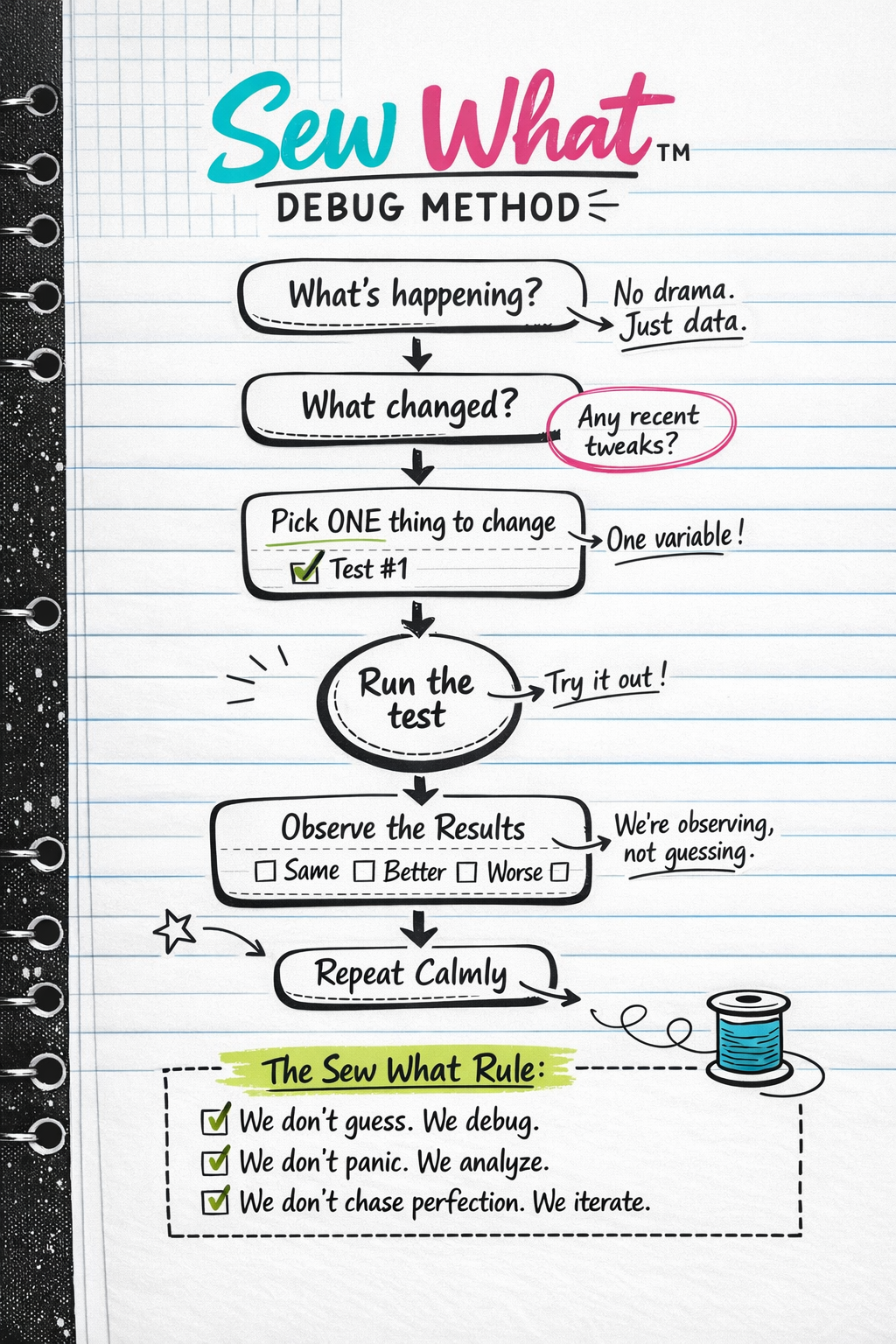
The Sew What Systems Method™
We don’t guess. We debug.
The Sew What Systems Method™ was built around one belief: Creativity gets easier when you understand how things work.
I come from a STEM background. I think in systems, metrics, and patterns. And honestly, that way of thinking completely shaped how I approach sewing education.
Because sewing is not random creativity floating through the universe untethered from logic.
It is structure.
Sequence.
Mechanics.
Variables.
It is essentially an algorithm in soft form. Here’s the framework behind the method:
1. Understand the Mechanics
If you understand how a stitch forms, you stop blaming yourself every time thread tension acts dramatic.
2. Follow the Sequence
Order matters in sewing. Threading sequence matters. Construction sequence matters. Small skipped steps create larger problems later.
3. Debug the Variables
Thread, tension, needle, fabric. Something changed. Let’s identify it calmly.
4. Iterate Without Drama
Version one is not failure. It’s data. Sometimes the data is slightly wrinkled. That’s still useful information.
5. Measure Progress Gently
We track growth, not shame. Because confidence grows faster when beginners feel safe enough to experiment instead of terrified of mistakes.
Understanding systems creates calmer, more confident sewing experiences.
Why Most Troubleshooting Advice Overwhelms Beginners
Calm observation solves more sewing problems than panic ever will.
A lot of sewing troubleshooting advice sounds something like this: “Just adjust the tension.”
Which would be incredibly helpful if beginners actually understood:
what tension does
why it changes
what normal tension looks like
what to adjust first
how to test changes systematically
Without that context, troubleshooting quickly turns into random button pressing with emotional consequences.
Here’s the difference:
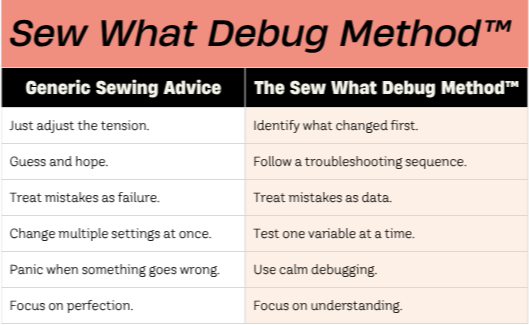
The difference isn't sewing skill. The difference is having a system for understanding what's happening.
Beginners do not need more pressure.
They need a calmer framework for understanding what the machine is communicating. Because sewing machines are constantly giving feedback. The problem is most people were never taught how to interpret it.
That’s exactly why the Sew What Debug Method exists.
Clear systems reduce overwhelm far more effectively than vague troubleshooting advice.
What’s Inside the Beginner Sewing Debug Guide
The goal is not perfection. The goal is understanding what changed.
The Beginner Sewing Debug Guide was designed to help beginners troubleshoot sewing issues without spiraling into frustration.
Inside, you’ll find:
“If X Happens → Check Y” Flowcharts
Simple visual troubleshooting paths designed to reduce overwhelm and guide your next step logically.
A Tension Troubleshooting Map
Because tension problems are usually less mysterious than they appear.
A Beginner-Friendly Decision Tree
A calm step-by-step process to help narrow down likely causes without guessing randomly.
“What Changed?” Logic Prompts
Questions that help you identify variables instead of assuming you ruined everything permanently.
The guide acts like a calm troubleshooting companion sitting beside you while you sew.
Not yelling.
Not overwhelming.
Not assuming you already know everything.
Just helping you pause, observe, and debug thoughtfully.
Because your machine is communicating.
The guide simply helps you translate.
Ready to Stop Guessing at Your Sewing Machine?
The Beginner Sewing Debug Guide was created to help beginners troubleshoot sewing problems calmly and logically without feeling overwhelmed every time something goes wrong.
If you’re tired of random guessing, panic-adjusting settings, or feeling like everyone else understands sewing except you, this guide will help you make sense of the system.
Download the Beginner Sewing Debug Guide and learn how to troubleshoot sewing with clarity instead of chaos.
Calm Debugging Builds Real Confidence
Confidence grows faster when mistakes become information instead of evidence.
One of the biggest shifts beginners experience is realizing they no longer panic every time something goes wrong.
That shift matters. Because confidence in sewing is not built through perfection. It’s built through understanding.
Once beginners realise:
thread nests can be diagnosed
tension issues have variables
crooked seams are fixable
machines respond predictably
They stop approaching sewing with fear. That’s why I teach sewing this way.
Not because sewing needs to become overly technical or robotic. But because understanding creates emotional safety. And emotional safety creates room for creativity.
Once you trust yourself to troubleshoot calmly, mistakes stop feeling catastrophic. They become part of the learning process instead of evidence that you should quit.
Version one is data. Version two usually goes much smoother.
Confidence comes from understanding systems, not avoiding mistakes.

Frequently Asked Questions
-
Usually, a variable changed somewhere in the system. Threading, tension, needle condition, or fabric type can all affect stitch quality and machine performance.
-
Start by changing one variable at a time. Check threading, rethread the machine completely, inspect the needle, and test tension systematically instead of adjusting multiple settings at once.
-
Thread bunching underneath is often related to upper threading issues. The thread may not be seated properly in the tension discs or the machine may need to be rethreaded carefully.
-
Troubleshooting becomes much easier when you understand the mechanics behind sewing. Most problems follow predictable patterns once you learn what variables affect stitch formation.
-
Pause and ask: “What changed?” Check the simplest variables first, including threading, needle condition, tension, and fabric setup.
What You Should Do Now
If sewing problems currently feel random, frustrating, or emotionally dramatic, you are not failing at sewing. You are learning a system.
And systems become much less intimidating once you understand how the pieces connect together.
The Beginner Sewing Debug Guide was created to help you troubleshoot with calm observation instead of panic, confusion, or endless guessing.
Because sewing machines respond to inputs.
Not shame.
Not frustration.
Not vibes.
You do not need to know everything to become confident at sewing. You simply need a calmer way to understand what changed.
Download the Beginner Sewing Debug Guide and start troubleshooting sewing problems with more clarity, confidence, and calm.
